Dust to Dawn
A new hope for rain…
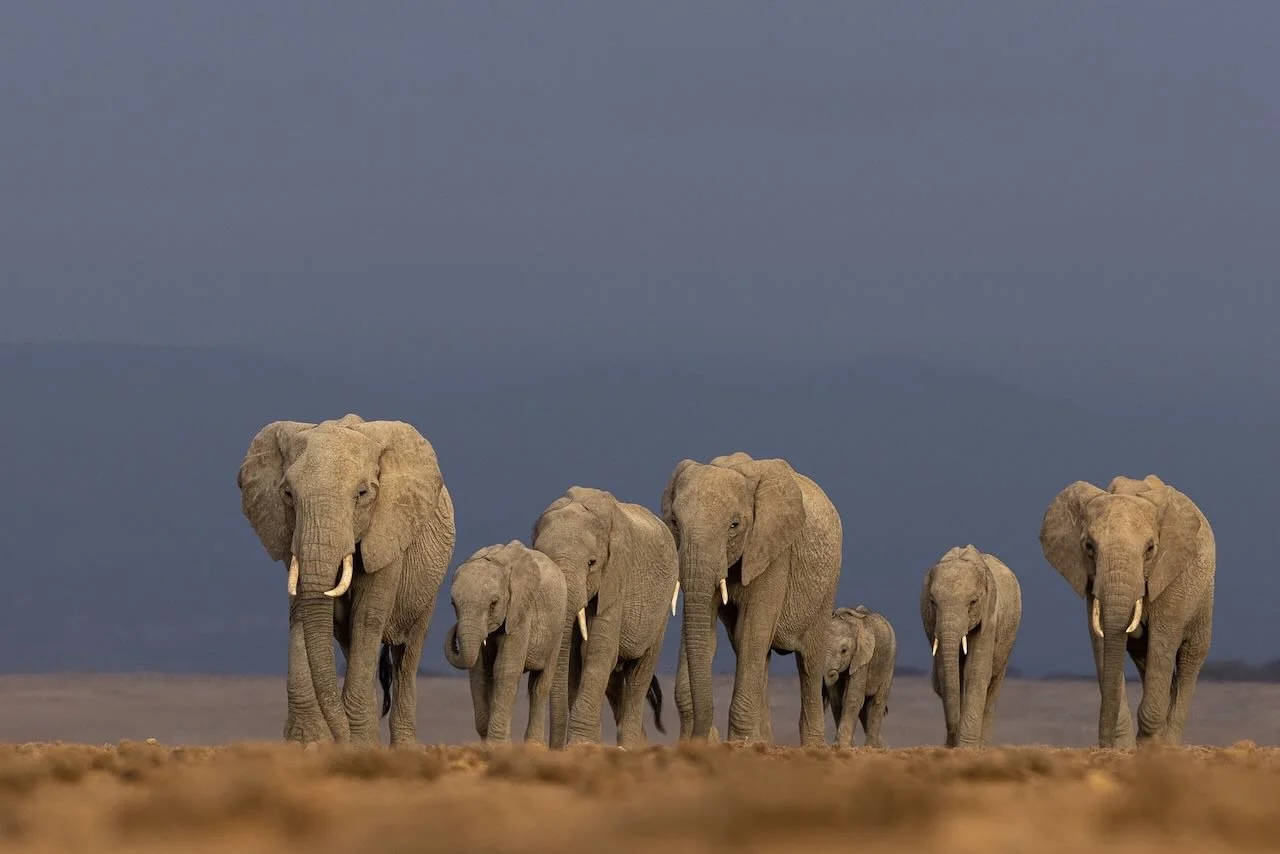
A family of elephants crossing the dry lake bed in Amboseli
Lying in the shadow of Africa’s tallest mountain, Mt Kilimanjaro, Amboseli is a paradoxical ecosystem. A dusty, desert wilderness with groundwater-fed wetlands - an oasis in a desert that is in sight of tropical forests.
It is an arid landscape, yet full of life. Famous for its well-studied families of elephants, Amboseli’s central lake and surrounding wetlands is the life-giving source of drinking water for these giants and their herbivorous companions, the zebra and wildebeest who are present in vast numbers. All of whom, but particularly the elephants and wildebeest, need drinking water regularly.
And yet, it is not water from below that is the problem. No animal here is thirsty. But they are dying in ever-increasing numbers due to a lack of food caused by drought. Plants need rain to grow. Seeds lying dormant in the ground need rain to germinate. And the herbivores need new growth desperately.
While zebras can survive on tall grass, wildebeest need the short, new growth to feed. And with no new growth, they are the first to perish.
It is heart-breaking to watch a wildebeest simply lie down and give up, never to rise again. Many are too weak even to flee from hunting lions who are too gorged to finish eating a wildebeest too tired to care that it is being eaten alive. Most that die are untouched corpses.

Wildebeest are dying in vast quantities due to a lack of food as rain bypasses Amboseli
In the week we spent in Amboseli, rain fell daily, in great sheets drenching the earth. But not here. On the tropical slopes of Mt Kilimanjaro. In the Chyulu Hills. In Arusha across the border in Tanzania. On every horizon but not where it was so desperately needed.
The elephant families still make their pilgrimages across the dry lake bed in the Kitirua Conservancy bordering the National Park but in decreasing numbers as they search out new areas for sustenance, relying on matriarchal experience handed down over generations to guide them. But their internal compasses fail to account for human expansion in areas bordering the Conservancy.
Across the border in Tanzania, where only a few short decades ago (barely a generation or two in an elephant family) there was access to tropical forests, these are now plantations owned by multinational companies who are less than pleased when a herd of elephants, following their generational routes, comes to feed. Also to the east between Amboseli and Tsavo where avocado farms have exploded into existence cutting off avenues to look for food.
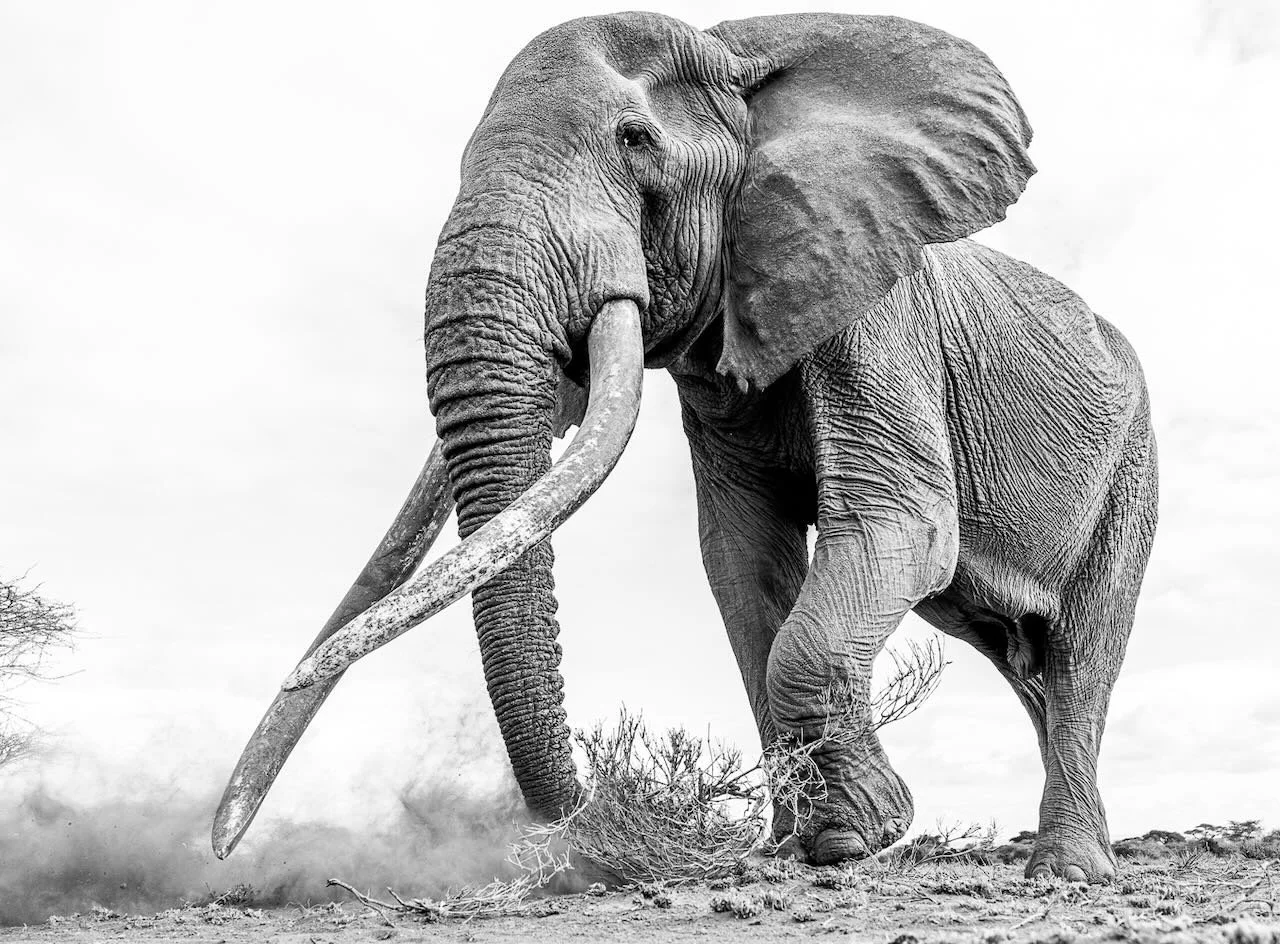
Craig, the largest remaining ‘Big Tusker’ in the world, has been struggling in the prolonged drought
When an elephant dies, the family mourns. In perpetuity. Paying their respects at the graves of fallen members. Witnessing this moment is one of the most powerful experiences I have had. It is one thing to die in a drought, quite another when options to alleviate the effects are cut off by man-made interventions. Especially those so casual in their callousness. The world does not need avocados year-round. Not when the cost is measured in lives.
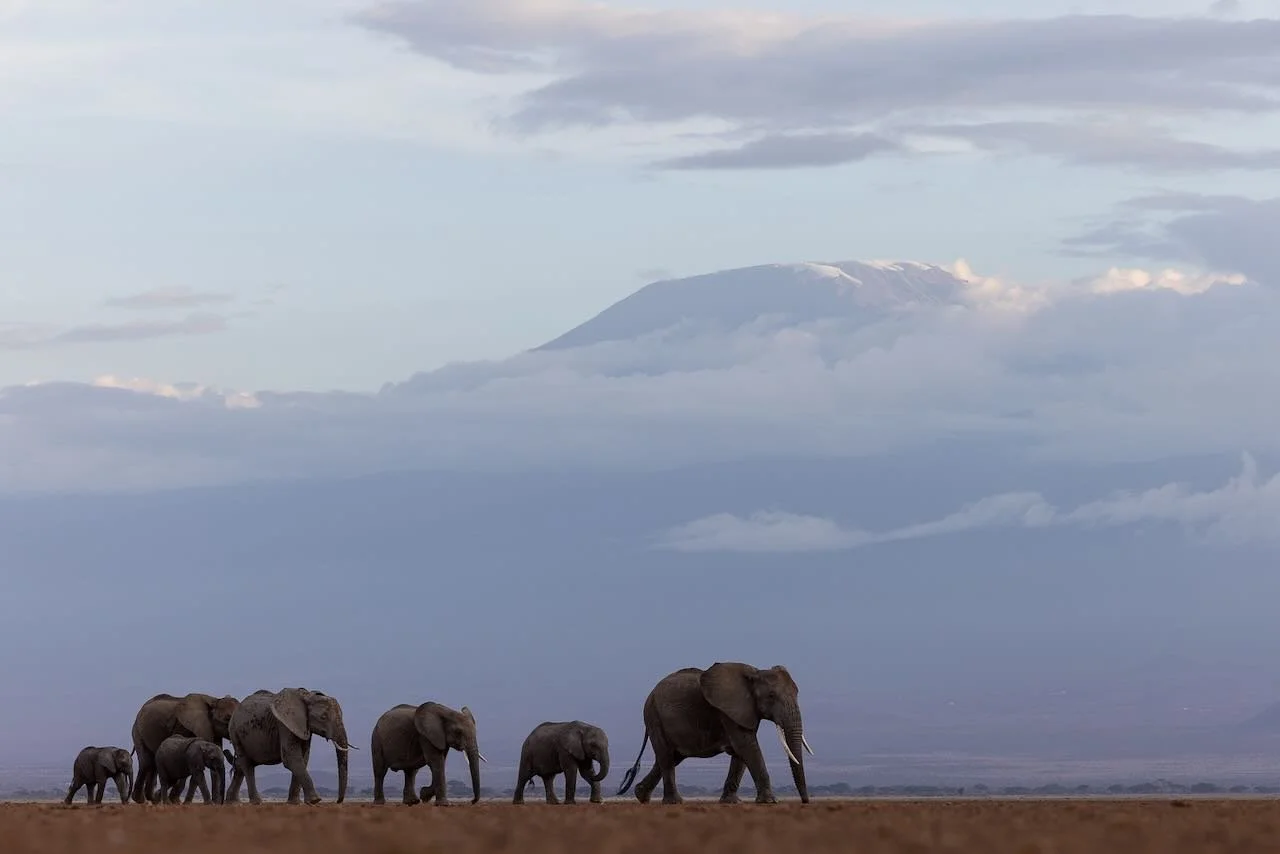
Mt Kilimanjaro, the world’s tallest free-standing mountain, rises over Amboseli
For all the death and suffering we witnessed, Amboseli is a magical place to visit. And certainly in which to photograph and film. In the Kitirua Conservancy where we did the bulk of our filming we spent a lot of time lying on the floor of our vehicle with the elephants approaching us and continuing on their way allowing us incredibly low angles and amazing, adrenaline-fuelled, intimate moments. Having them walk right past you gives you a massive perspective shift in just how large these amazing creatures actually are.
We were able to see first-hand how the families learn and adapt to change. The matriarch leading from the front. But often dropping back to allow her daughter, she who will be matriarch one day, a chance to lead. At these times, the herd is more flustered, unsure, looking back to their leader for guidance. And reassurance. Watching this and listening to the amazing guides who have been observing these animals for years gave us a whole new appreciation for these incredible giants.
When the rains do come, and they will, the families that survive will learn from this drought, wiser than before. Better equipped to survive the next one.
Provided we steer clear.

Hope for rain